Founder & Director
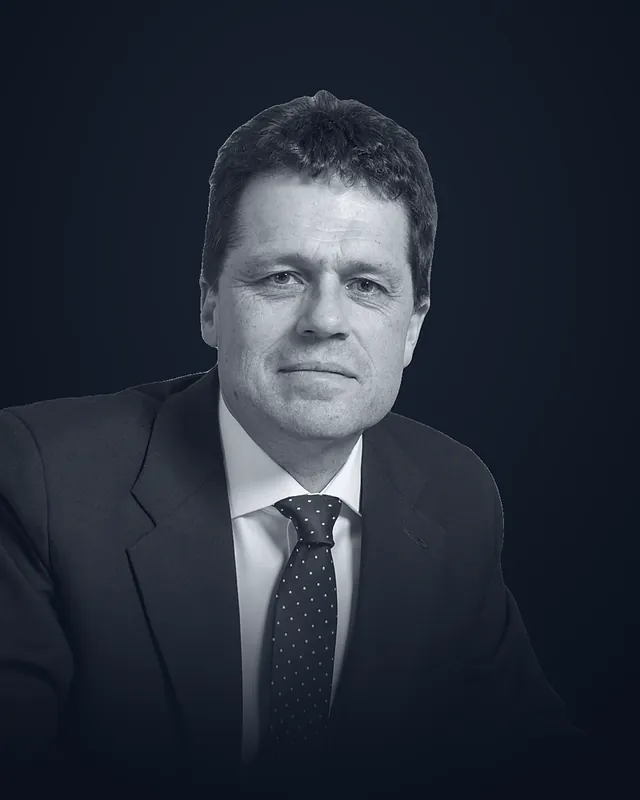
Professor Matthew Rosseinsky
OBE FRS
Professor Matthew Rosseinsky OBE FRS is Chair of Inorganic Chemistry at the University of Liverpool. His work brings together digital tools, machine learning and automation with experimental synthesis to discover advanced functional materials.
He earned a degree and a DPhil in Chemistry from the University of Oxford in 1990, then worked at AT&T Bell Laboratories before becoming University Lecturer in Chemistry at the University of Oxford in 1992. He moved to Liverpool in 1999. His research interests span a wide range of functional properties including optical, electronic, magnetic, catalytic and porous materials for applications including energy generation and storage, superconductivity, sustainable manufacturing and information technology.
A central theme of his work is the relationship between a material’s composition, structure and properties: using scientific understanding to guide the creation of materials in the laboratory. His career-long aim is to translate computer-guided materials chemistry into practical technological solutions. By developing AI-guided workflows that accelerate experimental discovery, his group fuses learning from data at scale with the expert insight needed to discover differentiated materials in practice.
He was elected a Fellow of the Royal Society in 2008, and became a Royal Society Research Professor in 2013. He has received many international awards, most recently the Basolo Medal of the American Chemical Society Chicago Section in 2022 and the 2024 George B. Kistiakowsky Prize Lecture at Harvard University. He received the 2023 Eni Energy Frontiers Award for the digital design and discovery of next-generation energy materials from the President of Italy. He was recognized in the 2024 King’s Birthday Honours List as an Officer of the Order of the British Empire (OBE) for services to materials chemistry research and innovation. In 2025, he was awarded the Royal Medal of the Royal Society by the King for “pioneering contributions to the design and discovery of materials, changing our understanding of synthesis to create function with digital tools.”